

by Atta Yvette
Toghu, also known as Atoghu, is a multi-coloured, intricately embroidered attire made by creating red and white patterns on a heavy black velvet fabric, originating from the North West Region of Cameroon. What began as royal clothing has today become a global symbol of African elegance.A Garment Born in RoyaltyToghu was originally reserved for kings, queens, and nobles. Every stitch carried meaning, with designs reflecting symbols of fertility, prosperity, protection, and ancestry. The traditional rulers of Bafut, Babungo, and Nkwen villages in and around Bamenda wore Toghu as a representation of the cultural wealth of the region. The Fabric and Its MeaningOriginal Toghu patterns are made with black, white, and red on heavy velvet. The designs carry deep meaning the gong motif represents the musical instrument played at traditional ceremonies, while varying design forms are specified for children, males, and females. Going GlobalToghu gained worldwide attention at the 2012 London Olympics, when Cameroon's team marched in Toghu outfits. Since then, it has graced international fashion shows and red carpets from Paris to New York. Modern designers slimmed down the traditional robes and embraced brighter colours, making Toghu suitable for everyday wear not just festivals and palace events. More Than FashionToday, Toghu is worn by people of all backgrounds — Muslims, Ewondos, and even Europeans. It has become a national and international symbol for Cameroon As one designer summed it up: "This fabric is an identity. It is who we are."
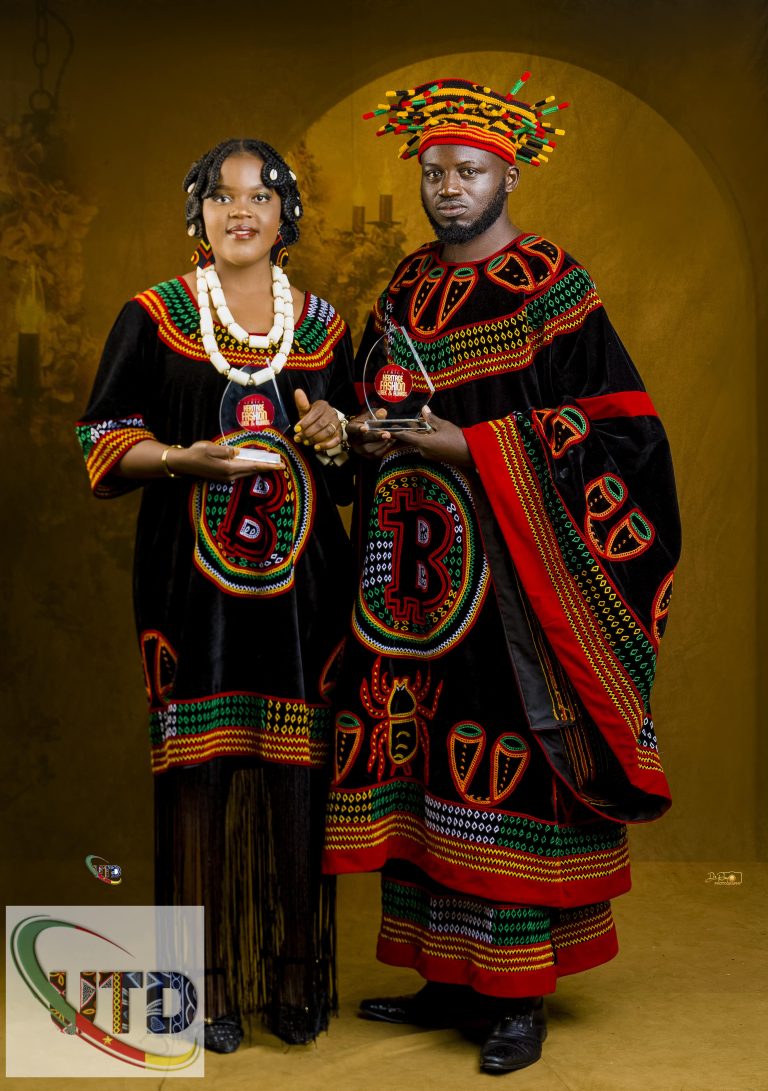
couples with tohguo